


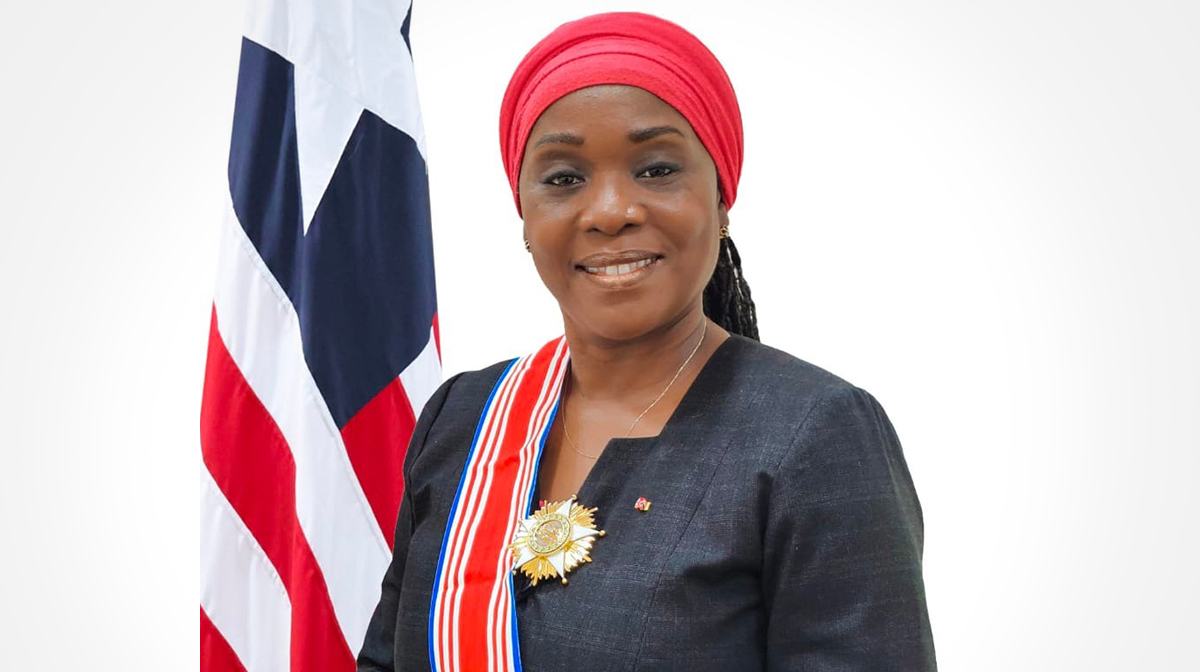
29 Jan Interview with H.E. Sara Beysolow Nyanti, Minister of Foreign Affairs and Dean of the Cabinet, Liberia
How would you describe Liberia’s current foreign policy priorities, and what guiding principles shape its global diplomatic engagements today?
Under President Boakai, Liberia’s foreign policy emphasizes economic diplomacy, launched in 2024 ahead of similar U.S. initiatives. For us, economic diplomacy goes beyond trade – it focuses on attracting investment and creating jobs. This aligns with the ARREST Agenda, which prioritizes agriculture, roads, rule of law, education, sanitation, tourism, and energy technology, all designed to strengthen the private sector and diversify the economy.
With over 60% of our population under 35, youth employment is essential. The Foreign Ministry works closely with the Ministries of Commerce and Finance and the National Investment Commission to turn Liberia’s challenges into investment opportunities, using diplomacy to promote growth, empower Liberians, and strengthen the rule of law as a foundation for investment.
What steps is Liberia taking to deepen intra-African diplomacy and regional cooperation, particularly across ECOWAS and the African Union?
Liberia engages actively with the African Union, ECOWAS, and the Mano River Union, our subregion with Sierra Leone, Guinea, and Ivory Coast. We recently won a non-permanent seat on the UN Security Council for 2026–2027, a historic milestone for Liberia. For the first time in our 178-year history, Liberia will represent Africa on the Security Council, addressing continental and global security issues. We won 181 out of 187 votes, elevating Liberia’s role on the continent and globally.
This seat links global engagement with economic diplomacy. Liberia previously held a shared seat in 1961 but never a full term. Now, representing Africa, we are engaging countries worldwide to advance discussions on the African Continental Free Trade Agreement, ECOWAS, the ECO currency, and creating common marketplaces to attract investment. Ministries of Finance and Commerce play critical roles, but for President Boakai, diplomacy is about national development, job creation, and strategic economic engagement.
A concrete example: we connected Liberian women traditional cloth makers with Burkinabé manufacturers of weaving machines. Within three months, they were trained and expanded production capacity, boosting local industry. Rwanda is also visiting to discuss peace, security, and development partnerships – a historic opportunity that reflects President Boakai’s commitment to promoting African investment and leveraging global engagement for national growth.
With growing American interest, what specific opportunities exist for U.S. investors in Liberia?
We have a U.S.-Liberia dialogue coming up, focused on private sector investment, including engagements with the DFC and corporate partners. Liberia is not a U.S. colony – it is home to 16 ethnic groups, enriched by settlers from the U.S., the West Indies, and the Congo Basin. While some settlers were freed U.S. slaves, Liberia’s identity is diverse. However, this shared history has created a natural and enduring relationship with the United States.
During a meeting with President Trump, I highlighted Liberia’s non-permanent UN Security Council seat and our economic diplomacy approach, which immediately showcased the potential for American investment. Liberia has a long U.S. connection, from Firestone and rubber plantations to a global diaspora and dual citizens. Our upcoming global diaspora conference in Washington (Sept 26–28, 2025) underscores these ties. Opportunities for U.S. investors span energy, mining, manufacturing, agriculture, tourism, IT, and the blue and green economies, as well as partnerships with SMEs – all of which can create jobs, drive value addition, and foster mutually beneficial relationships.
What is your final message for USA TODAY readers considering Liberia as their next business and investment destination?
Liberia is the historic home of returned freed slaves, offering a meaningful connection for African Americans. Beyond heritage, we have untapped opportunities in tourism, energy, IT, and infrastructure, including some of the world’s best waterfalls and water resources. This is a moment to explore Liberia’s historic, cultural, and economic potential amid a changing global landscape.
Liberia has been present at the founding of the League of Nations and the United Nations, and now holds a UN Security Council seat, highlighting the importance of multilateral engagement. Our journey from war to a stable, strengthening democracy reflects the impact of international cooperation – from the U.S., African Union, ECOWAS, and others – demonstrating that global partnerships can drive real results for foreign policy and national progress.