

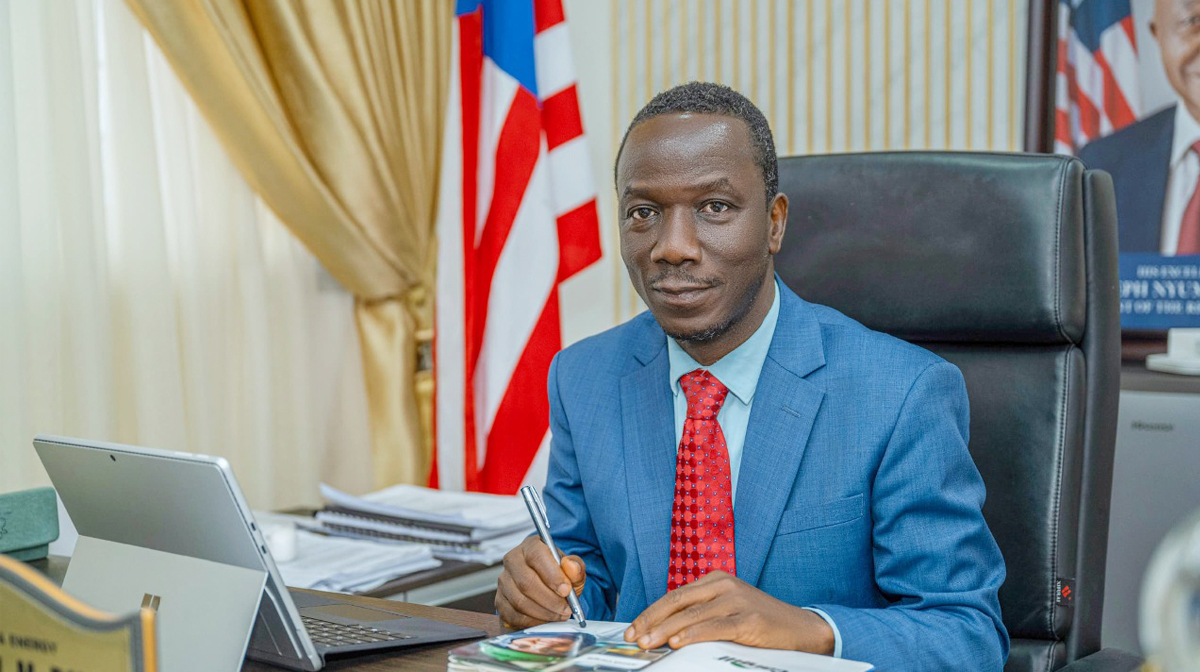
22 Jan Interview with Hon. Wilmot J. M. Paye, Former Minister of Mines and Energy, Liberia
What is your strategic vision for Liberia’s mining and energy sectors, and how are you working to ensure these industries drive sustainable national development?
Under President Boakai, the Ministry of Mines and Energy is focused on driving growth through mining and energy. Liberia’s mining sector heavily depends on power, yet most concessionaires generate their own electricity, limiting national benefits. That is why we prioritize expanding domestic power generation under the ARREST Agenda for Inclusive Development.
We are reforming the Liberia Electricity Corporation by breaking its monopoly over generation, transmission, and distribution, opening the sector to private operators and independent power producers. Our $1 billion National Energy Compact identifies energy as a key driver of growth. With support from the World Bank and proposals from independent producers under review, our vision is that by 2029, at least 75% of Liberians will have universal energy access.
Mining, Liberia’s largest revenue earner and main source of foreign exchange, has traditionally focused on iron ore, gold, and diamonds. Thanks to decades-old USGS surveys, we know Liberia has many more resources. We are updating these studies with USGS and partners to provide accurate data, reduce negotiation times, make projects bankable, and attract investors. Comprehensive geological mapping is a top priority under the ARREST Agenda to create jobs, attract investment, and generate revenue for education, agriculture, and infrastructure. Beyond traditional minerals, Liberia has significant potential in rare earth and energy transition minerals, with a full national assessment planned by 2029–2030.
We are reviewing existing concessions, many poorly negotiated and not benefiting communities. Our vision rests on a “triangle” of investors, host communities, and government – each must gain. Improved infrastructure and regulation are opening the country to responsible, balanced mining growth. For example, one Turkish company produces $20–30 million in gold weekly, more than the national budget, highlighting past shortcomings.
Liberia is stable and peaceful, with regular elections, a hospitable population, and no xenophobia. Investors can easily repatriate profits. Historically, U.S. companies have invested here – from LAMCO and Swedish Minerals to Firestone, now Bridgestone. Today, we are building on that legacy, including an agreement with Ivanhoe to ship iron ore from Guinea via Liberia’s ports. Under President Boakai, rail infrastructure will be open to multiple users, providing cost-effective coastal access.
Opportunities extend beyond mining to agriculture and regional trade. With 350 miles of coastline, the longest in West Africa, Liberia can serve as a gateway for landlocked Sahel countries. The proposed Liberty Corridor, similar to Angola’s Lobito Corridor, would connect Guinea and neighbors to the sea, creating significant economic impact.
For U.S. investors, Liberia is uniquely attractive: stable, peaceful, historically tied to the U.S., and a safe entry point into West Africa’s critical minerals and trade opportunities.
Considering Liberia’s historical ties with the U.S., how can American investors, development agencies, and members of the diaspora contribute meaningfully to Liberia’s energy and mining future?
The upcoming U.S. diaspora conference, where President Boakai will speak, highlights an underutilized resource: our diaspora. For too long, they have been seen mainly as sources of remittances, but they are far more – skilled professionals, entrepreneurs, and investors with expertise in oil, gas, technology, and more. With over half a million Liberians in the U.S., plus growing communities in Canada, Europe, and Australia, this is a huge human asset.
Our message is clear: Liberia needs its people to help build the nation. The government’s role is to create the right environment – transparent governance, stronger institutions, and attractive investment opportunities – so they have the confidence to return and invest meaningfully. Liberia is not just open for investment; it is a destination. We offer political stability, strong leadership, no xenophobia, and a welcoming social environment.
Opportunities are vast: over 90% of Liberia’s mineral potential remains untapped, including recent gold and iron ore discoveries near Monrovia and along the coast. In energy, our hydro, solar, and water resources are immense, making Liberia a natural hub for renewable energy. Agriculture and value-chain development also hold significant promise. For American investors, Liberia offers both opportunity and deep historical and cultural ties, making it the easiest and most natural entry point into West Africa.
Do you have any final comments?
The Putu iron ore project in southeastern Liberia holds one of the region’s largest high-grade deposits, with over 50% hard ore content. It was acquired by Russian company Severstal in 2014 but stalled due to financial issues, and sanctions have complicated matters. The government’s position is clear: Liberia needs this asset back.
Discussions are ongoing, and once resolved, Putu will become a major investment opportunity. President Boakai has prioritized unlocking this project, and we aim to remove hurdles by year-end so development can begin next year. We are also engaging U.S. partners, as American interest and support could accelerate the process and bring this strategic resource into production.