


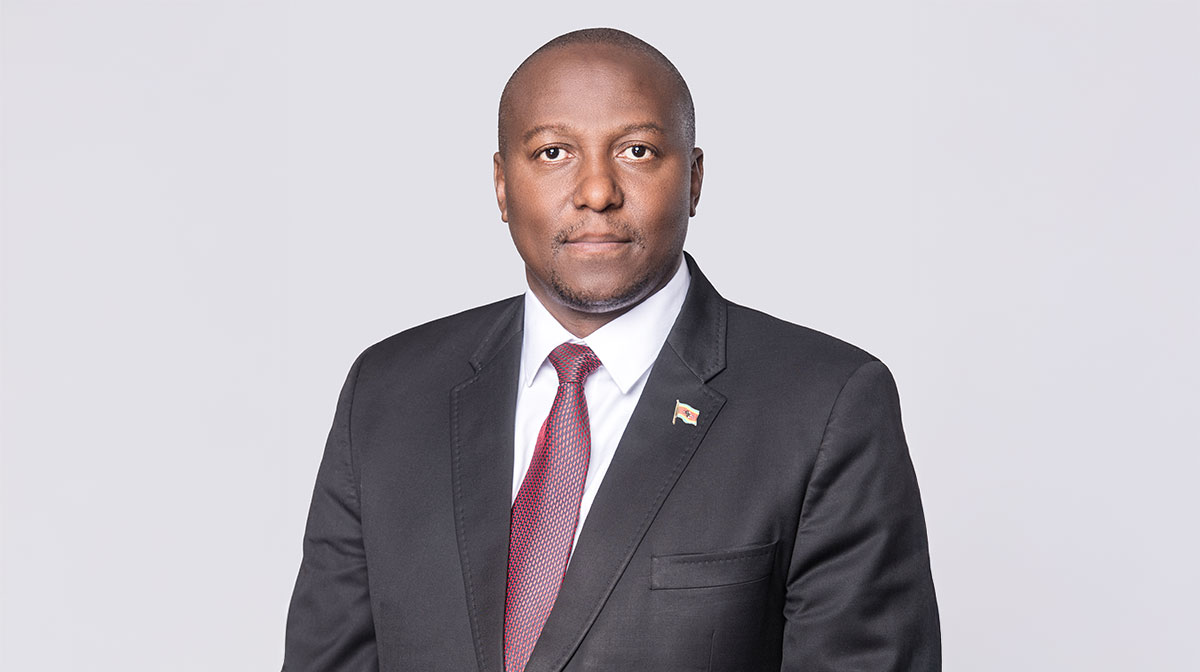
02 Dec Interview with Russell Mmiso Dlamini, Prime Minister, Kingdom of Eswatini
What key factors are driving renewed confidence in Eswatini’s economic growth?
Confidence in Eswatini’s economy has been driven by a combination of factors. First, his majesty the king has given us a clear mandate to transform Eswatini into a developed country as soon as possible. Guided by this vision, our administration has put forward a medium-term program of action while preparing our long-term plan. This program focuses on accelerating development and aligning with his majesty’s vision. Our approach has generated wide interest, from citizens eager to participate and intellectuals analyzing and contributing ideas to international financiers interested in our potential. Another key driver of this attention is our commitment to infrastructure development, which is essential for growth. Several major projects are already underway. For example, the $300-million strategic oil reserve has begun, and large-scale dam construction projects worth billions of lilangeni are moving forward. While we are still in early stages, these initiatives reflect our bold vision and determination to fast-track Eswatini’s development.
On the private sector side, local companies and multinationals have invested heavily, bringing in significant foreign direct investment. For example, Lubombo is developing a large-scale biomass power project that is worth billions. The government has also secured loans to expand infrastructure, including new factory shells to attract investors. Tourism is recovering strongly after the pandemic. Before the COVID-19 crisis, we welcomed nearly one million visitors annually, and our goal now is to double that. Beyond cultural activities, we want to extend stays by promoting other attractions, including locations we are working to have recognized as UNESCO World Heritage sites. Agriculture is another priority, with growing investment in agro-processing to add value locally and support broader economic growth.
How has the government’s 30-year development strategy reshaped the long-term trajectory of Eswatini’s national growth?
Our 30-year vision is called the Grand Plan for National Transformation. When his majesty opened parliament this year, he declared it the era of transformation. The plan focuses on transforming three pillars: the economy, the social sector and the government. At this stage, our priority is economic transformation, and the guiding principle is to go big. In the past, our investments were limited to the needs of a small nation of 1.2 million people. Now, we are positioning Eswatini as part of a much larger market, with over 300 million people in Southern Africa and 1.4 billion across the continent. The plan identifies key sectors and builds around anchor investments. For example, if a major investor comes from the US, we ensure that supporting industries grow around it to create jobs and accelerate economic change. With our stability, educated population and regional access, Eswatini is ready to compete on a continental scale.
Our transformation is ongoing, and our grand plan has visibly strengthened Eswatini’s branding on the world stage. As we roll out its communication and marketing, we want to remain realistic and not artificial. Eswatini is known for peace and stability; investments here are secure. Our system combines tradition with modern democracy. While some view monarchies as absolute, ours is not. Our system blends democracy with tradition. We have a constitution, and our governance involves both democratic structures and the monarchy working together. Members of parliament are elected, while a few are appointed to represent minority groups such as chiefs, women and people with disabilities. We also hold regular people’s parliament dialogues. Continuity is ensured because the king remains, while the prime minister and cabinet serve fixed terms. Eswatini is also known for its culture and traditions. We do not perform culture for tourists; it is part of our daily life, preserved in its original form. This authenticity, combined with our ambition under the grand plan, is central to our rebranding as a country.
What incentives are in place to make Eswatini a competitive destination for foreign investors?
One major incentive we have introduced is streamlined residency for investors. Those that bring in significant foreign direct investment can secure residence permits for key staff, and — at higher levels — even permanent residency. On taxation, we are open to discussions but remain cautious about a race to zero taxation. Instead, we evaluate incentives based on impact. For example, companies that create a large number of jobs are prioritized. We also provide ready-built factory shells owned by the government, which are available at minimal rent. This allows investors to start operations quickly without the delay of building from scratch.
What prime openings should U.S. investors be looking at as they explore Eswatini’s growing market?
Our current top priority is energy. Today, 100% of our local power generation comes from renewable sources, mainly solar and biomass. We are currently exploring plans to expand into geothermal. To support industry development, we also require reliable base load power. Our goal is to reach at least 1,000 megawatts within the next five years. We are also focusing on agriculture — especially our high-quality coffee that ranks among the best in Africa — and pharmaceuticals. The largest project under our 30-year grand plan is the intermodal transport system, which involves upgrading air, road, rail and even sea access. To this end, we have been offered a site to build our own port in Mozambique. Linked with new dry ports, upgraded rail and expanded airport facilities — including a dedicated cargo runway, hangars and a hotel — this project intends to boost trade, logistics and tourism. We hope to attract direct international flights beyond Africa.
Eswatini is ready and open for business. We welcome serious investors to join us in mega projects and major investments. With access to over 300 million people in the Southern African Development Community and more than a billion across Africa, Eswatini offers strong regional opportunities. Our infrastructure is reliable; one can reach any part of the country within two hours. By 2030, we aim for universal access to electricity and potable water, and we are well on track. We are currently preparing bankable projects so investors can easily partner with the government or invest independently.